CONSTITUTION
1. PREAMBLE
This constitution applies to all members of this group. All are expected to adhere in all collection, plans and functions of one or the entire membership must be within this constitution.
2. (a) NAME.
The name of the group shall be…………………………………….
Proposed, agreed and approved by members in a group
(b)Registration
Registered as a welfare association in the ministry of gender and culture
3. OBJECTIVES OF THE GROUP
I. Help members in areas of welfare and the improvement of living standards
II. Unite members in bold friendship and mutual understanding
III. Acquire and manage assets
IV. To create a forum for members to socialize, share ideas and experiences
V. Any other objective that members agree upon.
4. REGISTRATION
I. Over 18 years of age
II. Be in the animal health/production industry
III. Of good moral values /conduct
IV. Share and uplift the objectives of the group
V. Upon voting and acceptance by members, this new member is entitled to pay the prescribed registration non refundable fee as per the rules and regulations
5. EXECUTIVE COMMITTEE
(a)The executive committee mandate comprise of;
I. To coordinate and facilitate the implementation of the objectives of the group
II. To prepare and give regular reports
III. Implement resolutions made by the group
IV. Interpret the constitution
V. Any other matter as directed by the group
(b)Comprise of elected group members;
Chairman
Secretary
Treasurer
6. DUTIES OF EXECUTIVE MEMBERS
(a)Chairman will;
I. Be the spokesman of the group
II. Show direction and lead group members and all group activities and any other issue of common interest to the group
III. Chair all group meetings in adherence to this constitution
(b)Secretary will;
I. Be the custodian of this constitution , all records, resolution reports and correspondence of the group
II. Take minutes of all deliberation and table reports to the executive committee for discussion
III. Be in charge of organizing meetings for executive committee, monthly meetings and the AGM
IV. Invite the committee meeting in liaison with the chairman
(c)Treasurer will;
I. Keep proper record of book of accounts,
II. Prepare budgets and the annual returns
III. Draw statements of income and expenses, cash flow and the balance sheet
IV. Ensure safe custody of group assets and keep updated records
V. Be a signatory to all financial statements with the chairman and secretary.
7. ELECTION OF OFFICE BEARERS
(A) Office post
All group members are eligible to hold any office post. The aspirant must not have any disciplinary case 12 months prior to elections.
(b)Tenure of office
I. Election will be held annually.
II. The chairman, secretary and treasurer can only serve for only two consecutive terms, re-election can only be done after 3 terms
III. A by election can be called to fill in any vacancy within two months
(c)Removal from office
Any executive member can be replaced
I. During the annual general meeting
II. Before the expiry of the office tenure, through a substitution motion passed and approved by a majority of 2/3 of the members
III. As a result of clause 10(a) i,ii,iii and iv
(d)Methodology from office
Election will be by show of hands or secret ballot
(e)Assumption of office
Upon election, the new office bear(s) will; assume office for 21 days when the necessary instruments and the financial statements are handed over.
8. ANNUAL GENERAL MEETING
The annual general meeting will be held when the election is conducted.
(a)Agenda of AGM
I. Confirmation of the minutes of previous AGM.
II. Chairman report.
III. Election of executive committee.
IV. AOB
(b) Special annual general meeting.
The executive committee or any member in the event of urgent matter will call a special general meeting of any special purpose by giving a notice to members in writing of 7days to all members. Half of the members shall consist of SGM.
9. ASSETS AND LIABILITIES.
(a)Funds
The group shall obtain funds from;-
I. Members’ subscription and contribution.
II. Fines and penalties as set in the rules and regulations of the group.
III. Good will from well wishers.
IV. Any lawful source e.g. banks, micro-finance institutions.
The group shall operate a bank account, with the executive members as the signatories
A special general meeting can replace any of the signatories in consideration of the welfare of the group.
The financial year shall run as indicated in the rules and regulations
(b) Contribution.
I. Members shall make a contribution as indicated in the rules and regulations. Any change must be supported by 2/3 members.
II. On welfare and social affair the members shall contribute a minimum amount as indicated in the rules and regulations.
10. (A) WITHDRAWAL OF MEMBERSHIP AND REFUND OF CONTRIBUTIONS.
(a)The following situations will terminate membership.
I. Voluntary resignation by informing secretary in writing.
II. Upon death of a member.
III. If a member fails to attend three meetings continuously without sufficient reason[s] or fails to remit the agreed contribution for three months, will be deemed to have voluntary withdrawn his membership.
IV. If a member is found to have behaved in gross misconduct or in a manner that adversely affect the dignity of the group.
(b) Appeals.
A member aggrieved a determination under clause 10[a1] may appeal to the executive committee within 30 days.
(c ) Refunds.
In any case above the treasurer shall reprocess any item in his/her procession and will;-
Refund a percentage as per the rules and regulations
10 [ii]. Pass any resolution made by the group as per the rules and regulations.
(11) AMENDMENTS.
I. Any member can come up with proposals of amendments to this constitution by writing to the secretary who in turn table the same to the group for discussion and approved by at least a quorum of the members.
II. Such attendants are forwarded to the registering authority.
12. RULES AND REGULATIONS.
Other than this constitution, simple majority [50%] will amend the rules and regulations from time to time as determined by members as annexed herein.
13. EFFECTIVE DATES.
This constitution must be passed by voting at least 65% members and become effective immediately.
The current office bearers will be deemed to have been elected under this constitution of their last term as per clause 7[b] upon of the constitution.
14. DISTRIBUTION.
Each member is entitled to a copy of constitution and on event of amendment being made; they must give to each other.
Distribution cost will be borne by the group.
15. DRAWINGS.
Any drawing by a member shall be charged as per the rules and regulations. Before any drawing is made, it must be approved by all members if essential security will be given.
16. SHARING OF PROFITS.
Any profit or loss made or incurred will de shared by members in the basis of fixed capital/contribution.
17. DISSOLUTION OF THE GROUP.
I. The group shall not be dissolved except by a resolution passed at AGM, the resolution must be supported by 75% of members.
II. Upon approval of the dissolution by registering authority .the executive committee shall take no action other than liquidation for cash all group assets and settle all liabilities
Tuesday, January 17, 2012

Wednesday, November 23, 2011
Tuesday, November 8, 2011
BIO GAS
Advantages
Production of green energy - electricity and heat
Considerable environmental advantages - less methane, CO2 and emission of nitrous oxide
Environmentally friendly recirculation of organic waste from industry and households
Less odour inconveniences when spreading slurry - fermented slurry smells considerably less than normal slurry and the smell decreases faster
Protection of subsoil water - improved nitrogen exploitation which reduces leaching and thus protects the drinking water
Reduced costs for artifical fertilizer
Production of green energy - electricity and heat
Considerable environmental advantages - less methane, CO2 and emission of nitrous oxide
Environmentally friendly recirculation of organic waste from industry and households
Less odour inconveniences when spreading slurry - fermented slurry smells considerably less than normal slurry and the smell decreases faster
Protection of subsoil water - improved nitrogen exploitation which reduces leaching and thus protects the drinking water
Reduced costs for artifical fertilizer
Monday, July 4, 2011
INTERNATIONAL RABBIT MARKETING SEMINAR 2011


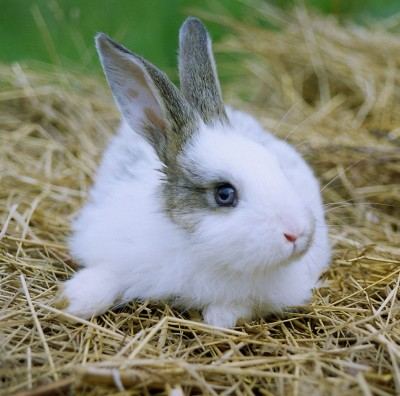
Musa Veterinary Clinic in conjunction with other stake holders in international rabbit marketing has the privilege to invite you to the first International Rabbit Marketing seminar in Kenya. This is a forum for sharing information on the development of sustainable cunniculture technologies; methods, particularly well adapted for use by small scale producers in developing countries.
Date: 15th October 2011
Time: 8am-4pm
Venue: Marble arch hotel, Nairobi.
CHARGES
US $ 134 (Kshs 12000)
TOPICS TO BE COVERED
Rabbit management: diseases, records and breeding
Rabbit meat production for small holders’ farmer
Economic importance of rabbit meat
Rabbit keeping policies and economics.
E-Commerce in rabbit marketing (I.T. enabled services)
Supply chain and value addition in rabbit keeping
Markets, standardization and certification.
Organic farming in rabbit keeping
Rabbit meat processing (quality control, quantity hygiene and food safety)
Rabbit meat grading
Skin treatment
Proposal writing in rabbit marketing
Finance and management for small holder farmers.
BENEFITS
Face to face meeting with rabbit meat buyers.
Trips to major rabbit farms in the world.
Sponsorship to rabbit Bio-technology seminars.
Participation certificates.
The attendance fee is Inclusive of…
Stationery (books and pens)
Meals
Website maintenance
Registration of the international rabbit marketing group
Registration to rabbit marketing firms.
Rabbit market networking.
Registration is through m-pesa on 0725-042992
Registration closes on 8th October 2011
Thursday, February 24, 2011
NEW DRUG IN THE MARKET TO BE DISTRIBUTED BY MUSA VETERINARY CLINIC
VITAMAX HERBAL POWDER
Vitamax is used in the symptomatic treatment of diseases associated with Mineral deficiency, metabolic disorders and infertility. It is used as a metabolic booster in all farm animals including rabbits and in the prevention/treatment of caecal dybiosis, coccidiosis, pasteurellosis, collibacillosis, Tyzzer’s disease, staphylococcus infections, salmonellosis, Bordetellosis, venereal spirochetosis, encephalitozoonosis and enterotoxaemia in rabbits and poultry. It also acts as a laxative in cases of coli/bloat, as an aid in stress cases, as a natural milk booster, as an effective microflora promoter and as a calcium/phosphorous supplement.
Extracted from the leaves and roots of indigenous rain forest trees of central Africa, This herbal supplement does prove the efficiency of Ethno-veterinary medicine.
DOSAGE
Boil with half litre of water to make a smooth suspension and administer orally. For rabbits, administer in drinking water. Monthly administration is encouraged.
Vitamax is used in the symptomatic treatment of diseases associated with Mineral deficiency, metabolic disorders and infertility. It is used as a metabolic booster in all farm animals including rabbits and in the prevention/treatment of caecal dybiosis, coccidiosis, pasteurellosis, collibacillosis, Tyzzer’s disease, staphylococcus infections, salmonellosis, Bordetellosis, venereal spirochetosis, encephalitozoonosis and enterotoxaemia in rabbits and poultry. It also acts as a laxative in cases of coli/bloat, as an aid in stress cases, as a natural milk booster, as an effective microflora promoter and as a calcium/phosphorous supplement.
Extracted from the leaves and roots of indigenous rain forest trees of central Africa, This herbal supplement does prove the efficiency of Ethno-veterinary medicine.
DOSAGE
Boil with half litre of water to make a smooth suspension and administer orally. For rabbits, administer in drinking water. Monthly administration is encouraged.
Saturday, November 27, 2010
Swiss System:
Swiss System:
In the 1800's, the format of chess tournaments was often a "Round Robin", where each opponent played all of the other opponents. This is the best way of determining playing strength; however, the number of rounds needed are prohibitive for a large number of entrants. For example, for 32 players, there would be 31 rounds using the Round Robin format. And for many scholastic sections, it's not uncommon to have 100-300 players, which would require from 99 to 299 rounds!
Today, in order to host a large number of players in a single weekend, the "Swiss System" is used. Invented by J. Muller and first used in a chess tournament at Zurich, Switzerland, in 1895 (hence "Swiss" system), this pairing system was introduced in the United States by the legendary George Koltanowski.
In the Swiss system, after the first round, players are placed in groups according to their score (winners in the 1 group, those who drew go in the 1/2 group, and losers go in the 0 group). So each round, you play someone with the same score as you. Since the number of perfect scores is cut in half each round, it doesn't take long until there is only one player remaining with a perfect score. (The actual number of rounds needed to handle the number of players in the section is 2n, where n = the number rounds. So for 32 players, 5 rounds are needed to determine a clear winner, since 25 = 2x2x2x2x2 = 32. After 1 round, there would be 16 with 1-0; after 2 rounds, only 8 would have 2-0 scores; after 3 rounds, 4 players would have 3-0 scores; after 4 rounds, 2 players would score 4-0; and after the 5th round, only 1 player would have a score of 5-0). In actual practice, there are usually many draws, so more players can be handled (a 5 round event can usually determine a clear winner for a section of at least 40 players, possibly more).
The current system "seeds" players according to their rating. Players are listed from highest rating to lowest, and unrated players are listed at random at the bottom, then assigned a pairing number for the tournament. The top half of the list then plays the bottom half of the list (if there are 32 players in the section, #1 plays #17, #2 plays #18, etc.), alternating colors (if #1 plays white, then #2 plays black and #3 plays white, etc.) The starting color for #1 is picked at random. In subsequent rounds, colors are alternated if possible. A player might be paired the same color twice in a row if necessary, but is usually not paired the same color three times in a row, unless absolutely necessary (for example, both players have played the same color twice in a row, and there is no other logical pairing).
After each round, players are placed in scoring groups, or "packs", according to their score. Then the above process is repeated within each score pack. If a scoring pack has an odd number of players, the lowest pairing number within the pack plays the highest pairing number in the next pack down (for example, if there were an odd number of 1's after the first round, the lowest rated 1 would play the highest rated 0.5, if there were any players who drew the first round, or the highest rated 0 if there were no draws the first round). So ideally, you're either playing someone with the same score as you, or usually no more than 1/2 or 1 point lower or higher than your score.
Pairing adjustments are made if both players are due the same color, unless it cannot be avoided. Also, in tournaments where team scores are kept, players from the same school are usually not paired against each other. Directors have the discretion of overriding this, however, if all or most of the players within a section are from the same school.
In any event, players are never eliminated in Swiss System or Round Robin tournaments. Also, you may not play the same player twice within the same tournament. If there are 5 rounds, you will play 5 different players. If there is an odd number of players in a section, the lowest rated player with zero points will receive a 1 pt. "bye". (Unrated players should not be given a bye unless there are no rated players with zero points. This helps unrated players play more opponents to give them a more accurate rating). If there are no players with zero points, then the lowest rated player in the lowest score group gets the bye, etc. A player cannot receive more than one bye during a tournament.
The drawback of the Swiss system is that it's only designed to determine a clear winner in just a few rounds. However, there could still be ties if the last two players with perfect scores draw against each other. Also, the strength of the players between the top and bottom players is hard to determine. There could be many players with 3-2 scores, and it's hard to say which player is better than the others, or whether a player with 3.5 points is better than a player with 3 points. To help determine the order of finish, a tiebreak method is usually implemented.
Accelerated Pairings
If there are more players in a section than the number of rounds can handle (to determine a clear winner), then "accelerated" pairings are an option for the director.
Players are seeded as above, but in the first round, the players from the top 1/4 of the wallchart play the players in the 2nd 1/4 of the wallchart. The 3rd 1/4 plays the bottom 1/4. Then in the second round, the winners in the top 1/2 of the wallchart play each other, the losers in the top 1/2 play the the winners from the bottom half of the wallchart, and the losers from the bottom 1/2 of the wallchart play each other. (The reasoning is, the higher rated losers from the top half should beat the lower rated winners from the bottom half, which would cut down the number of perfect scores faster). After the 2nd round, all the players are lumped together within their score packs, as in the traditional Swiss method, and the tournament continues as a regular Swiss. The only difference is, there should be 1/2 as many players with 2-0 than there would have been with a straight Swiss System tournament. So up to 64 players could be handled in a 5 round tournament.
In the 1800's, the format of chess tournaments was often a "Round Robin", where each opponent played all of the other opponents. This is the best way of determining playing strength; however, the number of rounds needed are prohibitive for a large number of entrants. For example, for 32 players, there would be 31 rounds using the Round Robin format. And for many scholastic sections, it's not uncommon to have 100-300 players, which would require from 99 to 299 rounds!
Today, in order to host a large number of players in a single weekend, the "Swiss System" is used. Invented by J. Muller and first used in a chess tournament at Zurich, Switzerland, in 1895 (hence "Swiss" system), this pairing system was introduced in the United States by the legendary George Koltanowski.
In the Swiss system, after the first round, players are placed in groups according to their score (winners in the 1 group, those who drew go in the 1/2 group, and losers go in the 0 group). So each round, you play someone with the same score as you. Since the number of perfect scores is cut in half each round, it doesn't take long until there is only one player remaining with a perfect score. (The actual number of rounds needed to handle the number of players in the section is 2n, where n = the number rounds. So for 32 players, 5 rounds are needed to determine a clear winner, since 25 = 2x2x2x2x2 = 32. After 1 round, there would be 16 with 1-0; after 2 rounds, only 8 would have 2-0 scores; after 3 rounds, 4 players would have 3-0 scores; after 4 rounds, 2 players would score 4-0; and after the 5th round, only 1 player would have a score of 5-0). In actual practice, there are usually many draws, so more players can be handled (a 5 round event can usually determine a clear winner for a section of at least 40 players, possibly more).
The current system "seeds" players according to their rating. Players are listed from highest rating to lowest, and unrated players are listed at random at the bottom, then assigned a pairing number for the tournament. The top half of the list then plays the bottom half of the list (if there are 32 players in the section, #1 plays #17, #2 plays #18, etc.), alternating colors (if #1 plays white, then #2 plays black and #3 plays white, etc.) The starting color for #1 is picked at random. In subsequent rounds, colors are alternated if possible. A player might be paired the same color twice in a row if necessary, but is usually not paired the same color three times in a row, unless absolutely necessary (for example, both players have played the same color twice in a row, and there is no other logical pairing).
After each round, players are placed in scoring groups, or "packs", according to their score. Then the above process is repeated within each score pack. If a scoring pack has an odd number of players, the lowest pairing number within the pack plays the highest pairing number in the next pack down (for example, if there were an odd number of 1's after the first round, the lowest rated 1 would play the highest rated 0.5, if there were any players who drew the first round, or the highest rated 0 if there were no draws the first round). So ideally, you're either playing someone with the same score as you, or usually no more than 1/2 or 1 point lower or higher than your score.
Pairing adjustments are made if both players are due the same color, unless it cannot be avoided. Also, in tournaments where team scores are kept, players from the same school are usually not paired against each other. Directors have the discretion of overriding this, however, if all or most of the players within a section are from the same school.
In any event, players are never eliminated in Swiss System or Round Robin tournaments. Also, you may not play the same player twice within the same tournament. If there are 5 rounds, you will play 5 different players. If there is an odd number of players in a section, the lowest rated player with zero points will receive a 1 pt. "bye". (Unrated players should not be given a bye unless there are no rated players with zero points. This helps unrated players play more opponents to give them a more accurate rating). If there are no players with zero points, then the lowest rated player in the lowest score group gets the bye, etc. A player cannot receive more than one bye during a tournament.
The drawback of the Swiss system is that it's only designed to determine a clear winner in just a few rounds. However, there could still be ties if the last two players with perfect scores draw against each other. Also, the strength of the players between the top and bottom players is hard to determine. There could be many players with 3-2 scores, and it's hard to say which player is better than the others, or whether a player with 3.5 points is better than a player with 3 points. To help determine the order of finish, a tiebreak method is usually implemented.
Accelerated Pairings
If there are more players in a section than the number of rounds can handle (to determine a clear winner), then "accelerated" pairings are an option for the director.
Players are seeded as above, but in the first round, the players from the top 1/4 of the wallchart play the players in the 2nd 1/4 of the wallchart. The 3rd 1/4 plays the bottom 1/4. Then in the second round, the winners in the top 1/2 of the wallchart play each other, the losers in the top 1/2 play the the winners from the bottom half of the wallchart, and the losers from the bottom 1/2 of the wallchart play each other. (The reasoning is, the higher rated losers from the top half should beat the lower rated winners from the bottom half, which would cut down the number of perfect scores faster). After the 2nd round, all the players are lumped together within their score packs, as in the traditional Swiss method, and the tournament continues as a regular Swiss. The only difference is, there should be 1/2 as many players with 2-0 than there would have been with a straight Swiss System tournament. So up to 64 players could be handled in a 5 round tournament.
Subscribe to:
Posts (Atom)